In Paonia, CO and Salt Lake City, UT, KVNF and KUER’s two small newsrooms are covering a fast-moving disaster. Their reporters describe what it takes.
The staff at KVNF in Paonia, CO, sat down for a meeting the day the Gold Mountain Fire started, though nobody in the room knew that yet. Program director Brody Wilson had drafted an emergency response plan, and the group walked through it together.
“We did a little exercise. A fire breaks out wherever, what does everybody do?” says Audrey McCabe, the station’s regional newscast host and producer. “And then that fire actually broke out that night.”
Six hundred miles west of Paonia, at KUER in Salt Lake City, UT, the preparation started months earlier. Utah came out of a winter that was unseasonably warm and nearly snowless, and the newsroom had spent it covering snowpack and water supply. Low runoff and reservoirs running dry before winter’s end, says digital manager and editor Jim Hill, meant conditions would only worsen into summer, so the newsroom talked through what to watch for and ran a few early stories.
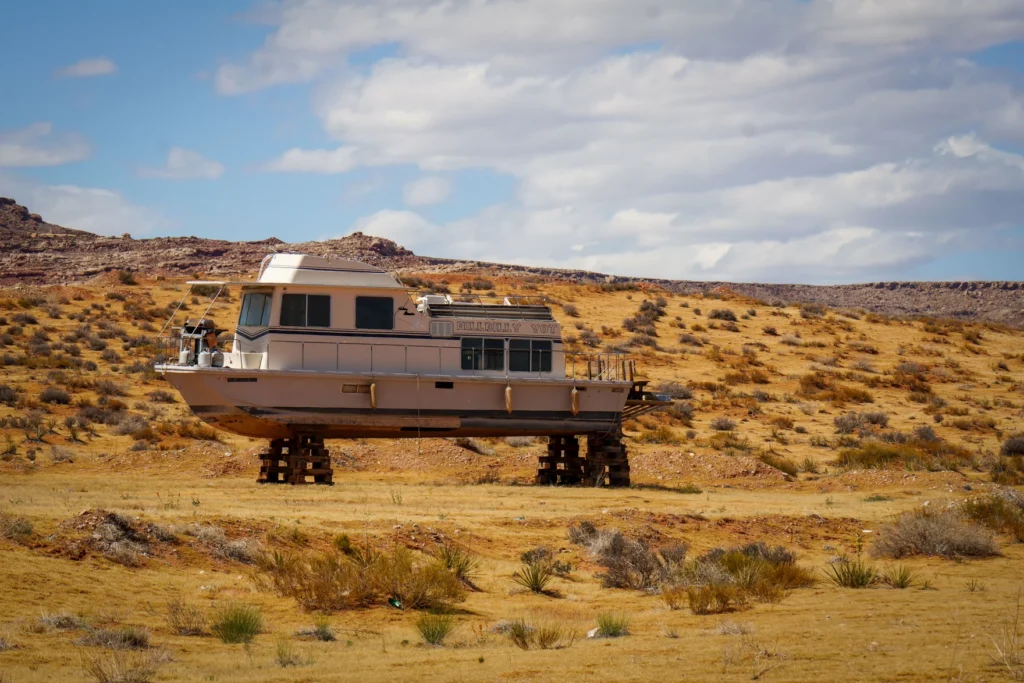
“The worst thing is that when something happens that you saw the triggering events for, but you didn’t necessarily pay enough attention to be ready to act,” Hill says.
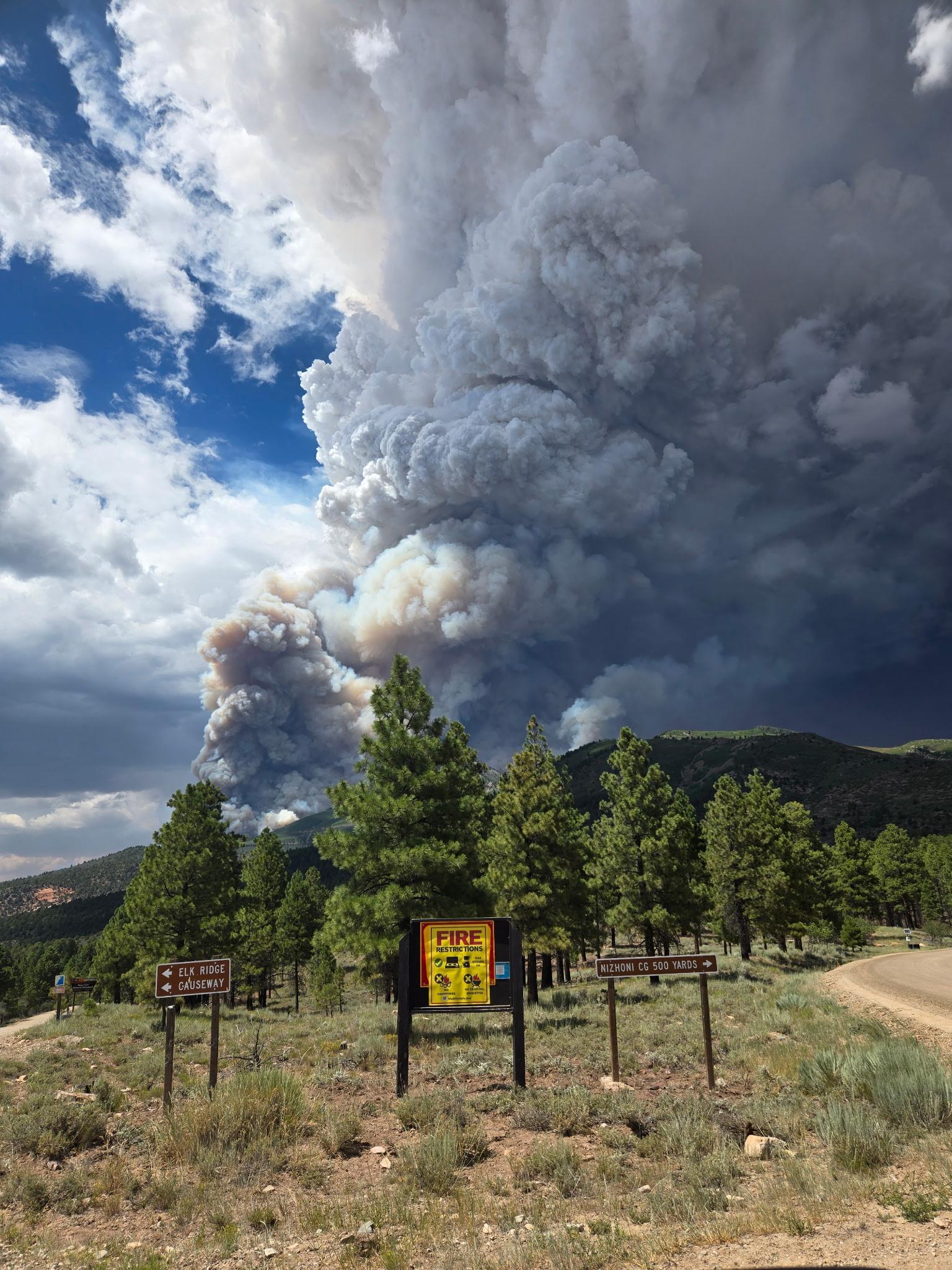
Unfortunately, those conditions proved ripe for wildfires. By July 6, Utah had burned more acres than it had in the previous five years combined, with the Cottonwood fire getting to just short of and the Babylon fire crossing 100,000 acres, ranking among the largest in the country. In Colorado, the Gold Mountain Fire drew roughly a thousand people to fight it, and four firefighters were killed on the Colorado-Utah border in late June. Both stations are covering a fire season that reflects an accelerating pattern.
The newsrooms doing that coverage are small. KUER has five reporters, one producer, three editors, and two hosts, serving the whole state from the Wasatch Front with a bureau in St. George. KVNF, in Paonia, covers four counties with what McCabe calls a “one and a half person” newsroom.
McCabe started at KVNF in March, three months before the fires. Having never worked in radio before this role, she joined after researching extremism and misinformation and serving in fact-checking jobs at Media Matters and PolitiFact. “I am my own editor, producer, writer, host,” she says.
Scale changes what each station can do, but not the underlying triage. At KUER, the day-to-day acreage and containment numbers live on a wildfire updates page and in newscasts, while a reporter’s hours go toward context and analysis.
“We really can’t invest a lot of resources into doing bigger stories on chasing the up-to-date turn of the screw or the play-by-play,” Hill says. He maintains the page himself, with support from southern Utah reporter David Condos, pulling what is scattered across federal, state, and public lands agencies into scannable text that draws most of its traffic through Google. Keeping it all aligned with what goes out over the air is its own task, and two of KUER’s three daily news meetings exist partly to reconcile the two.
KVNF’s ninety volunteer DJs read a PSA every half hour during the period of imminent danger, its language revised as conditions shifted, then scaled back to once per show as Gold Mountain gained containment and the newer Elk Fire opened evacuation zones.
McCabe began producing her newscast on Sunday nights for airing on Monday, because too many changes happened over the weekend for a piece produced Friday to still hold by its airing on Monday.
On social media, KVNF reposted what officials published in order to disseminate the information more quickly. “When it comes to this, it matters a lot more that people get the information than we have our branding on the posts,” she says.
Both stations work with safety officials, public information officers, and community word-of-mouth to paint a full picture of the disaster. Hill leans on official sources for fire size, evacuation zones, and road closures, where contradictory information is the standing risk, and connects to the community more for reported pieces instead. When the Babylon Fire threatened the historic Dugout Ranch, that became a two-way and a web story rather than a line in an update. McCabe’s first fire sources came through her run club and through social media. “Facebook is an information ecosystem here in a way that I have never seen before,” she says.
Hill’s outdoor-recreation listeners search and listen from well past the Wasatch Front, and McCabe’s are scattered across a Western Slope where Gold Mountain is burning country they camp and fish on.
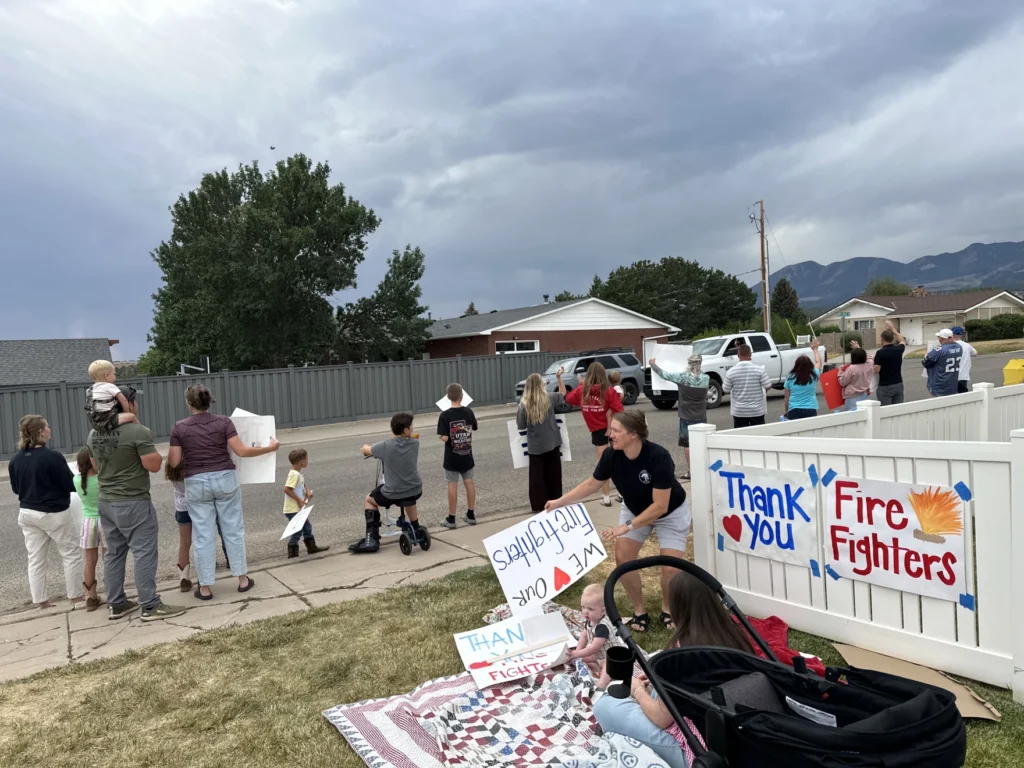
McCabe saw how far the fire’s weight carried when a procession brought the body of pilot Nicholas Dale through Montrose. Dale was a contract flier who crashed into Silver Jack Reservoir while fighting the Gold Mountain Fire. Residents lined San Juan Avenue with flags, and the county commissioners delayed a meeting to stand among them. None of the people weeping on the curb had known Dale personally. That was the story. “It feels like the Western Slope, we’re all kind of neighbors, even if we’re two hours apart,” she says.
Along with covering the emotional and physical impacts of the disaster, McCabe is very careful with her language when reporting on the more technical aspects of the fires. “We know that misinformation thrives when there’s a lack of reliable information,” McCabe says. “And so anytime there’s sort of a delay in the public getting information, that is when the conspiracy theories come.”
Hill frames the obligation in terms of what the audience can do with what they hear: an evacuation route, a decision about air quality, whether to move animals off far-flung property. “I think it’s kind of an inherent responsibility if we’re going to be a mission-driven news organization through a funding model that is answerable to the community,” he says.
The federal rescission did not change KUER’s fire coverage directly, but it changed the conversations inside the building. What the station does “isn’t service for service’s sake, it’s service for the community’s sake.”
McCabe used to make that argument from the outside. “When I was doing misinformation reporting and research, I would always say local news is the solution. Everybody needs to pay better attention to local news,” she says. “Now I am the local news.”
And that local news she helps make carries past simply filing the story. It is the ninety volunteer DJs reading the half-hour PSA, Wilson checking McCabe’s geography as she learns the region, the partner stations filling the minutes she cannot reach. Six hundred miles west, it is Hill’s fire page, Condos’s reporting, three meetings a day to keep one story straight.
Two small rooms covering a fire season neither could have guessed the size of, running the same plan: report the important stories, and connect the community to those they can trust.
Other Stories
See All
June 16, 2026
On Capitol Hill, Rural Station Leaders and the Lawmakers Who Represent Them Emphasize Their Vital Service
April 30, 2026
For Native Public Media and Tribal Radio Stations, the Signal Must Stay On
April 3, 2026
For Visually-Impaired Kansans in Rural Areas, Audio-Reader Brings the Local Stories
March 6, 2026
The First-Ever Rural Voices Day

February 27, 2026
noncomMUSIC Alliance: Turn on Wyoming Sounds. You’ll Hear a Friend on the Radio.