
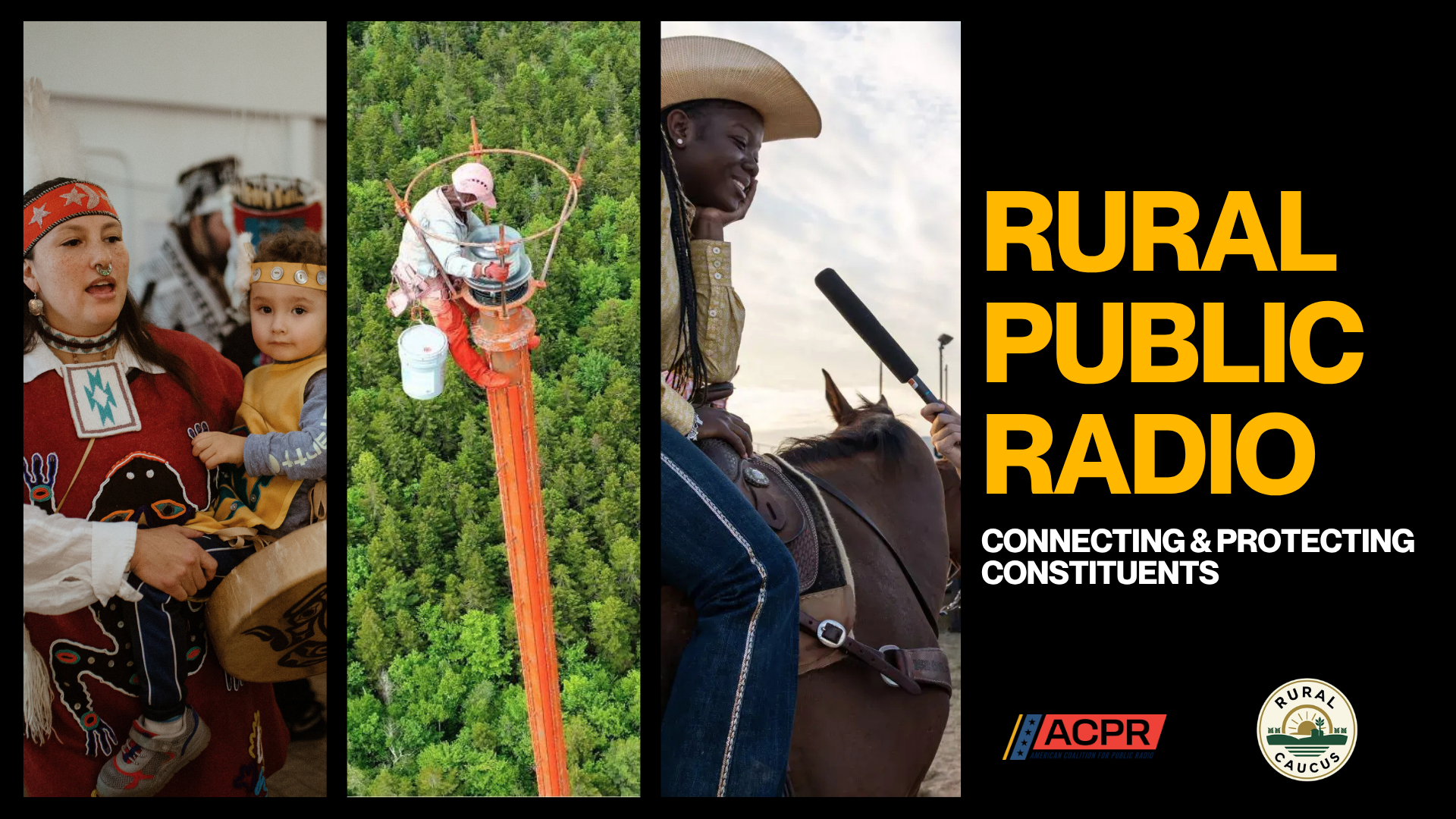
The Alliance of Rural Public Media, the American Coalition for Public Radio, and the Congressional Rural Caucus hosted a discussion on public radio’s vital role in connecting and protecting people across rural areas of America
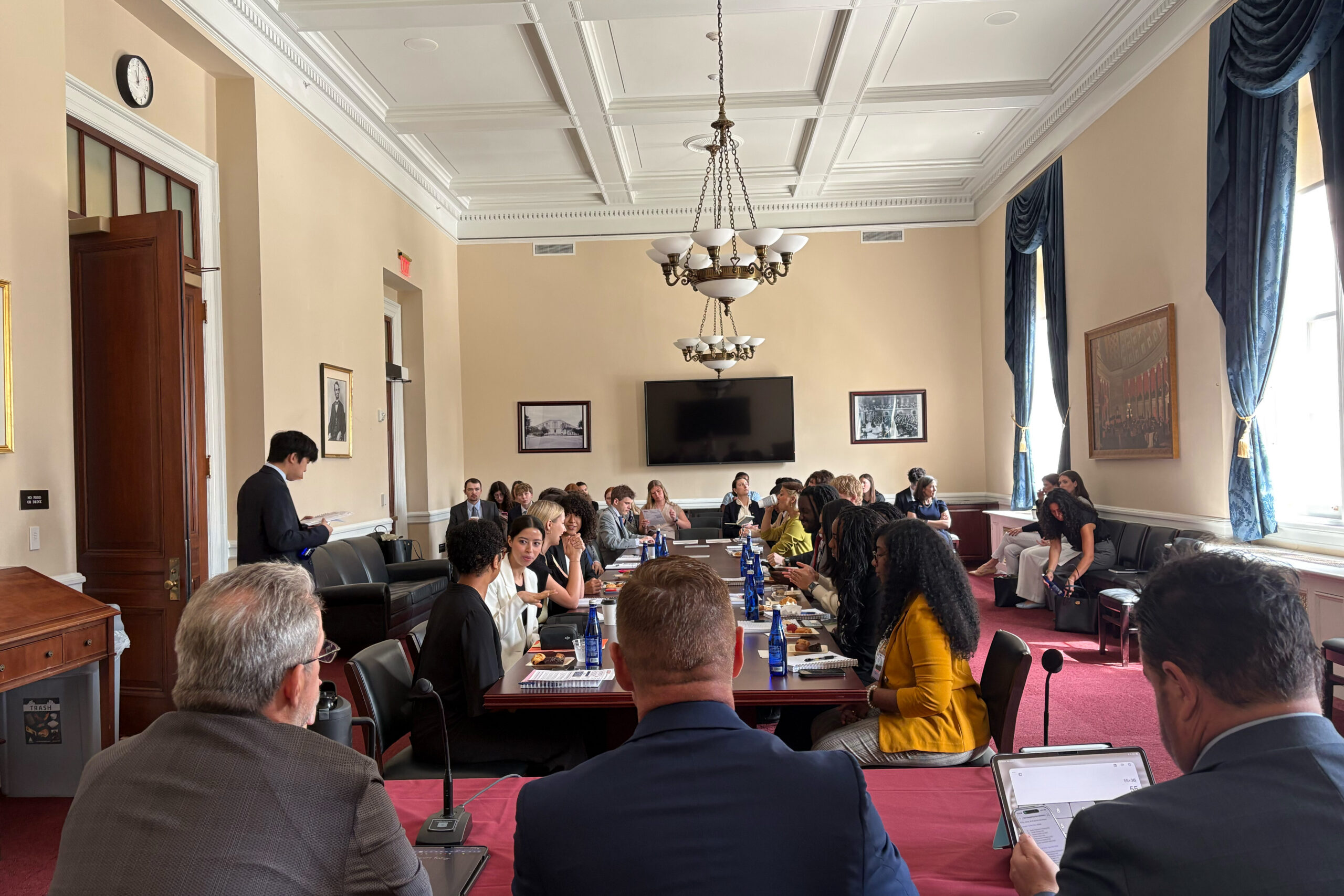
On Tuesday, June 9, leaders of three rural-serving public radio stations traveled to the Hill for a discussion on the critical services that public media provides to rural Americans. “Rural Public Radio: Connecting & Protecting Constituents” was hosted by the Alliance of Rural Public Media and the American Coalition for Public Radio (ACPR), in partnership with the Congressional Rural Caucus.
“The emergency management components to what you offer [are] just absolutely vital,” said Rep Adrian Smith (R-NE) during the event, co-chair of the Rural Caucus. Rep. Smith oversees Nebraska’s third district, which covers most of the state’s roughly 80 counties. He noted that wildfires were burning early this season – including the largest fire in the state’s history.
Nebraska Public Media’s (NPM) Stacey Decker illustrated how this public safety relationship plays out in real-time. His network is the state’s primary entry point for public safety alerts: once NPM receives the alert from emergency officials, they pass it on to commercial broadcasters, other public broadcasters, and cable providers. Nebraska logged 215 tornado warnings over the past two years.
Restrictions or cuts to public media funding have direct consequences. In seven of Nebraska’s counties, Decker said, NPM is the only local media source — areas that have no local paper and little broadband. If a single transmitter in that area were shut off to save money, the people in that service area would get no warning at all. “They started building [our alert infrastructure] 70 years ago when steel prices were much different,” he said. “We couldn’t afford to do it today.”
The rescission of federal funding for public media took nearly $4 million from NPM’s budget. Even with financial restrictions and limited resources, Decker said, the station has worked hard to grow its newsroom from eight journalists to twelve in two years.
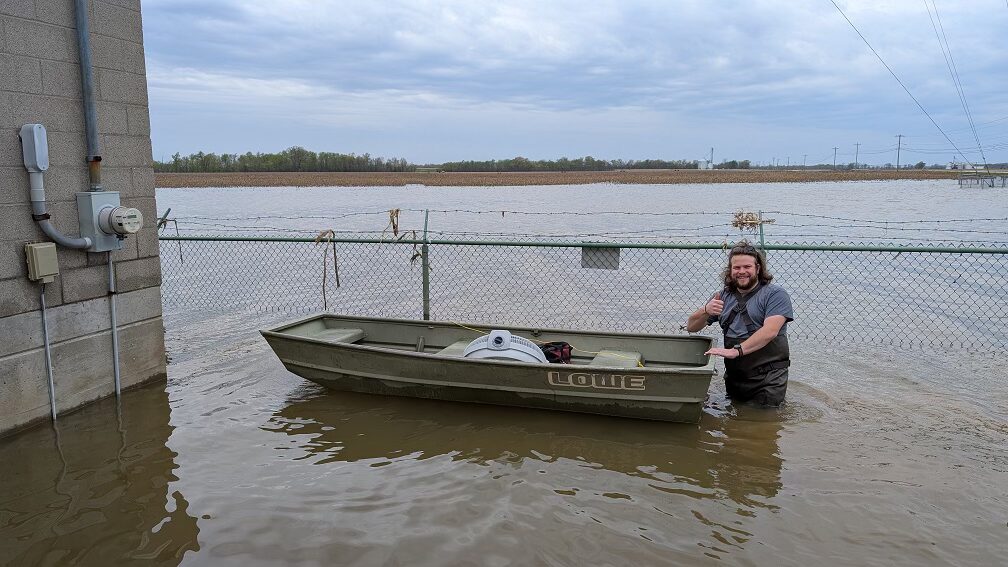
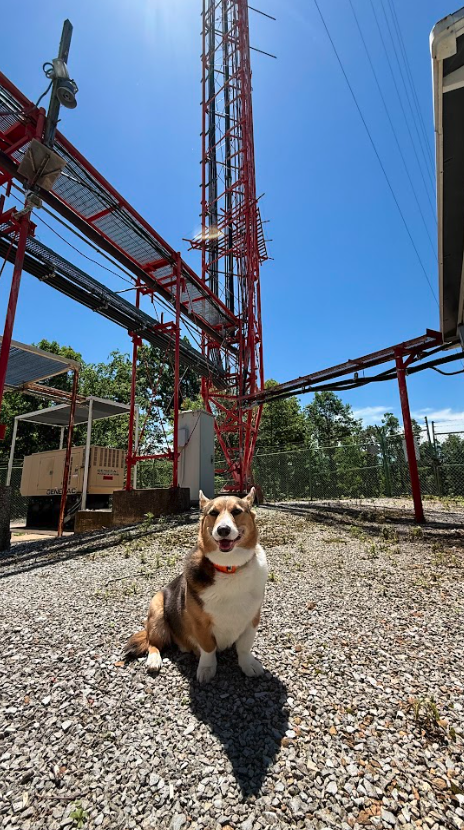
“You have to negotiate with a cow to get down the road to the transmitter site,” said Jordan Basham, interim executive director of WKU Public Media in Bowling Green, Kentucky. “That’s how you know it’s rural.” Keeping the signal on can mean scavenging a discontinued part from another broadcaster (or getting lucky on eBay), since WKU’s newest transmitter is about 20 years old.
WKU serves South Central Kentucky with a staff that includes 50 paid college students; Basham started as one of those students more than two decades ago. Basham noted how station staff are deeply embedded in the community, recalling how after tornadoes struck London and Somerset, one of the station’s hosts stopped to buy gloves and helped neighbors clear roads before filing his story.
Rep. Terri Sewell (D-AL), another co-chair of the Rural Caucus, reminded the panel that connection is what rural representation requires. “We know that our rural communities face unique and significant challenges, and we in the Rural Caucus are committed to working across the aisle to address those challenges.”
Kyle Gassiott directs radio at Troy Public Radio in Troy, Alabama. Troy Public Radio serves 44 counties with a staff of just seven people — 39 of those counties are rural. Between November 2025 and late May 2026, the station’s engineer counted roughly 600 weather alerts.
“If your cell phone isn’t working, and the cell phone tower isn’t working, what you’re going to have is your radio and your weather radio,” Gassiott said. He recalled the 2023 Selma area/Autauga County tornadoes that killed 7 people and the 2019 Lee County tornado that killed 23 people. Troy Public Radio was live from downtown Selma on All Things Considered just a couple of hours after the tornado hit.
Troy Public Radio host Joey Hudson was at a movie theater in the area when the Lee County tornado hit. With his recording equipment back at home, Hudson started recording the damage caused by the storm on his phone. He was on Morning Edition the next day talking about his experience in Lee County.
Troy also feeds the national network with local stories that resonate across America: this seven-person rural-serving station gets a story onto NPR’s national programming about once a month bringing rural voices to a national audience.
ACPR’s Brad Greenberg underscored the domino effect that could occur if rural stations have to close and emergency officials could no longer rely on public radio to reach nearly every pocket of their state. “Public radio makes our communities safer,” he told the room. “That’s not an exaggeration.” In Kentucky, Basham said, public media is the first option for emergency alerts across the state’s regions, and where commercial broadcasters could step in to carry them, none have.
Greenberg closed by pointing to the Rural Radio Resiliency Fund, a proposal backed by ACPR to provide operational support to the rural-serving stations that absorbed the deepest percentage cuts when federal funding ended. “The biggest issue right now is money,” he said. The need, he added, “it’s not for the stations, it’s for the people who those stations serve, your constituents.”
Other Stories
See All
October 7, 2026
Iowa Public Radio Took The Chance and The Time To Own Itself
August 6, 2026
Through the West’s Worst Fire Season in Years, Local Public Media Keeps their Communities Informed
April 30, 2026
For Native Public Media and Tribal Radio Stations, the Signal Must Stay On
April 3, 2026
For Visually-Impaired Kansans in Rural Areas, Audio-Reader Brings the Local Stories

March 6, 2026
The First-Ever Rural Voices Day
