After losing federal funding, stations across Indian Country, like South Dakota’s KOYA, are piecing together a path forward, with Native Public Media making sure they don’t do it alone.
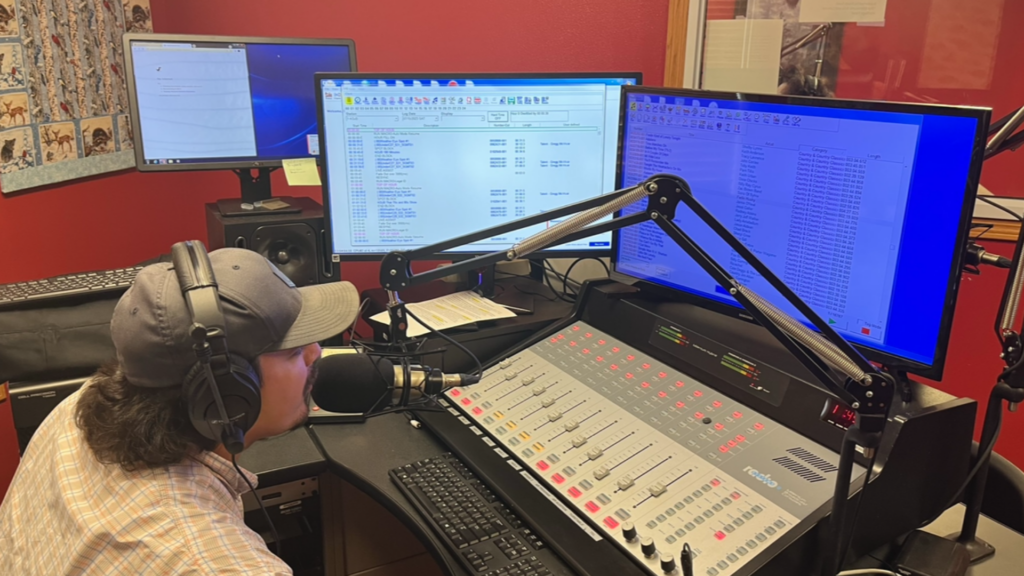
Before the Rosebud Reservation wakes up, John Miller is already on the road. He gets up at four in the morning and drives a total of 80 miles a day, back and forth, to reach the building in St. Francis, South Dakota, where KOYA’s two studios share a wall with KINI, its commercial sister station.
By seven, the station manager is on air, doing the morning show he’s been a part of for four decades. This morning, before he even sat down at the board, a message was already waiting on his phone. A listener he’s known for years is asking ”Millerman” for a song.
KOYA is one of roughly three dozen Native-owned and -operated radio stations that found themselves at the center of a funding crisis last summer, when Congress rescinded appropriations from the Corporation for Public Broadcasting (CPB) as part of a broader federal spending package. For many of those stations, the question wasn’t just about money. It was about whether the signal would stay on.
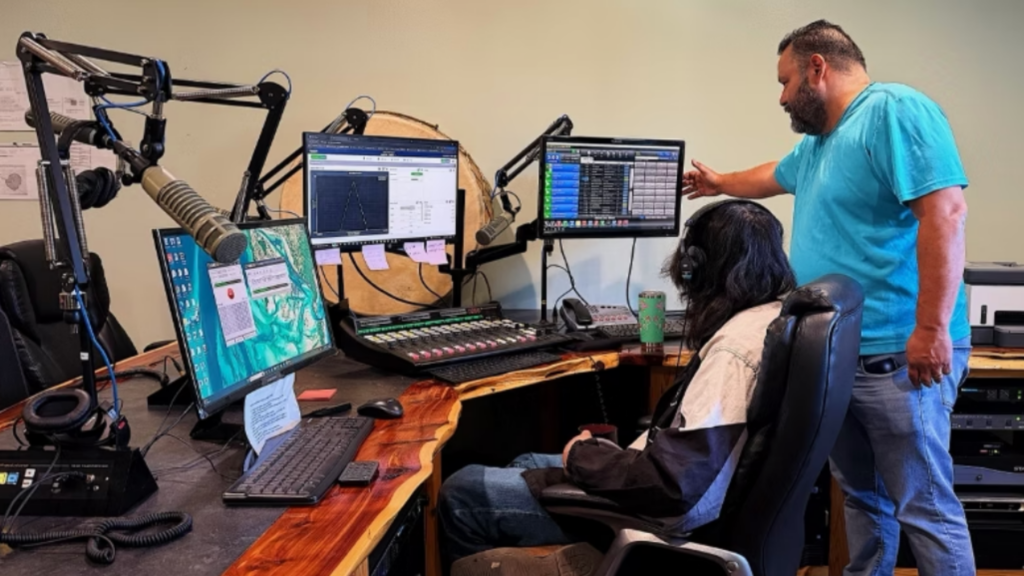
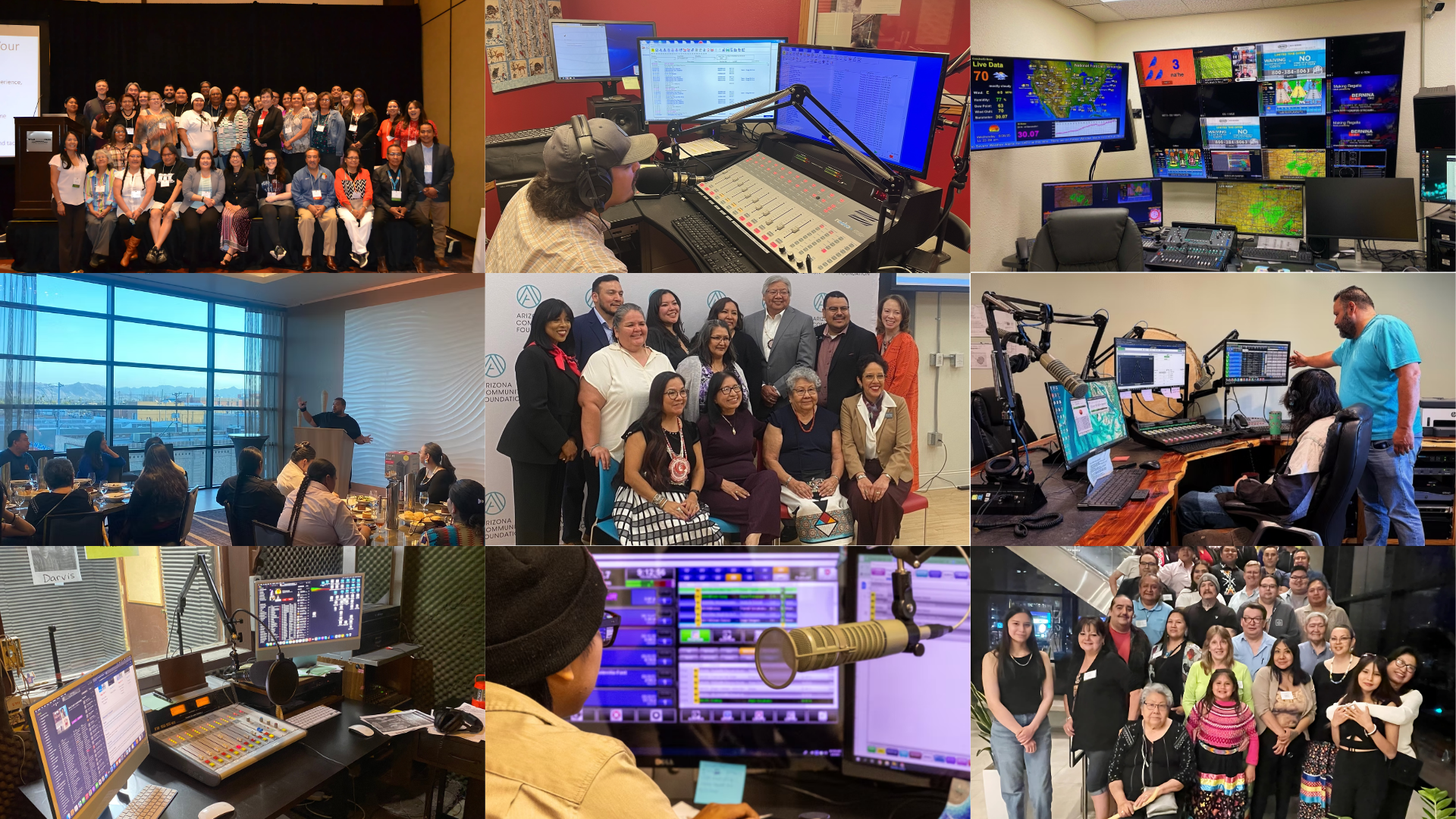
Founded in 2004, Native Public Media (NPM) is the national nonprofit that advocates for, supports, and connects Native and Indigenous public media organizations across the country. For the stations in its network, many of them on or near reservations with limited access to high-speed internet and few other reliable sources of local information, NPM functions as a lifeline: part policy advocate, part compliance guide, part emergency preparedness trainer.
“Being able to tell our stories the way that we want them to be told and not how it’s been in the history books where it’s glossed over,” says NPM Chief Operating Officer Brian Wadsworth, “that’s what having tribal radio stations run by tribal people means.”
When the rescission hit in the summer of 2025, NPM surveyed its network to understand the scope of the damage. What came back was stark.
“A lot of our stations did that,” Wadsworth says of the layoffs and operational cuts that followed, “Because there wasn’t that funding.”
A Bureau of Indian Affairs (BIA) allocation, $9 million secured through what has been described as a congressional handshake deal, was a hard-won acknowledgment of the federal government’s responsibility to Tribal nations, and it covered the vast majority of NPM’s network for FY26. But Wadsworth names what it actually is: “We’re trying to piecemeal it right now. That funding is not infinite. It will run out eventually.”
NPM has established two additional safety nets: a Tribal Station Emergency Fund for stations facing crisis situations, and a longer-range Tribal Media Endowment Fund. “It’s just a matter of letting that fund grow and build upon itself,” says Kyler Edsitty, NPM’s Program Coordinator.
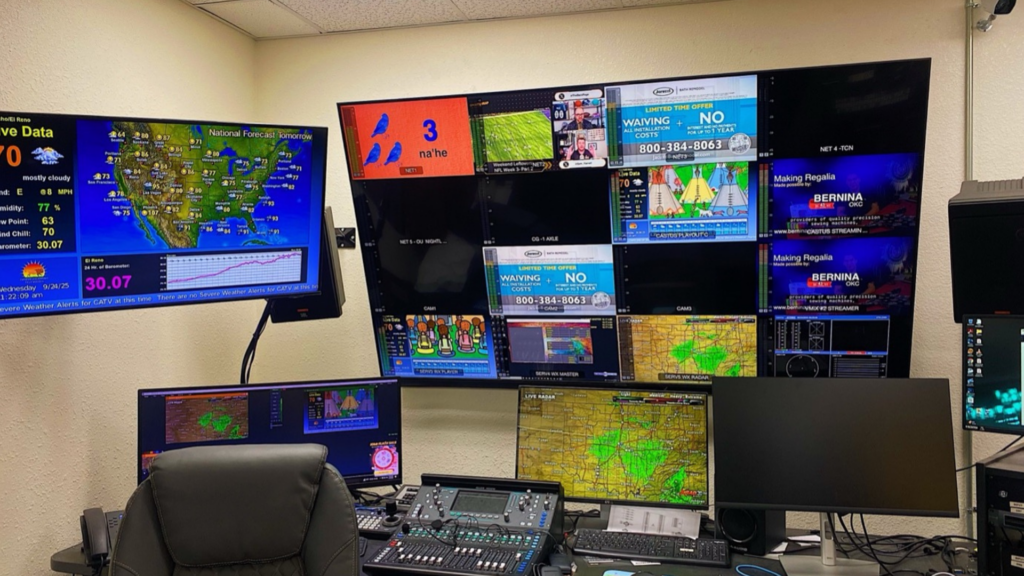
Stations like Cheyenne and Arapaho Television (CATV) provide public safety information, educational content, and local news.
Meanwhile, New Mexico’s state legislature has included language in its FY27 budget to continue funding public media stations within the state, including four tribal stations in NPM’s network. “We’re starting to see that initiative,” Wadsworth says. “We’re hoping that other states can maybe follow suit.”
That picture of patchwork resilience is visible in sharp relief on the Rosebud Reservation, where Miller’s connection to the stations goes back to 1985, when he walked in off the street after leaving the military and never really left. He’s a former Marine, a lifelong musician, a man who has done this work for most of his life for the love of it.
“It’s one of the few things in life that I’ve [done for] free for a long time,” he says. “Now that I’m getting paid for it, it’s kind of an added bonus.”
Under his management, KOYA has expanded its Native music programming from two hours a day to five: 4:00 to 7:00 in the morning and noon to 2:00 in the afternoon. The scheduling is intentional.
“A lot of our elder generation listeners, of course, they get up early. They have their coffee, their breakfast, they talk. So emphasizing the native music from 4:00 AM to 7:00 AM, that’s kind of their time,” Miller says. “The elders will take a nap about 10:00, get up at noon. So click on the radio again.”
The station also covers tribal council and committee meetings, which the Rosebud Sioux Tribe compensates them for — one of the relationships helping to offset what federal funding once provided.
For Miller, 2025 arrived with two losses at once. He had spent months writing a competitive FEMA Next Generation Warning System grant, a nearly half-million-dollar award that would have funded emergency generators, a new transmitter, and critical infrastructure upgrades. They won it.
“It was a competitive grant and we were one of the stations that was awarded. And I put a lot of myself into that grant,” he says. Then the money was clawed back. “That was like a kick in the gut, man, when they took that money back. And then when we got cut again with the funding from the Corporation of Public Broadcasting, that was another kick in the gut.”
The lost grant wasn’t abstract. It was a direct response to a devastating winter storm in 2023 that took lives on the Rosebud Reservation. Miller was out in it. “We actually got stranded in a small town for two days because the roads were closed down.”
A station without backup power in a community without reliable internet or cell service is, in an emergency, no station at all. “I could never understand why the past owners never thought about putting an emergency generator up here,” he says. He is still working toward that readiness through whatever means are available, including a tribal broadband infrastructure grant whose tower work may yield backup generators for KOYA as a side benefit.
“The pressures of not knowing is the hardest part to deal with on a daily basis,” Miller says. On fundraising, he is frank: “My forte on a personal note is not fundraising.” But he is prioritizing it.
Miller is currently partnering with a firm working through NPM to assess KOYA’s potential, cultivating a regional business relationship that allows a grocery chain’s commercial buys on KINI to double as sponsored public service announcements on KOYA. He also stays close to Edsitty for guidance. “If I’m thinking out of the box as a way to raise money, I’ll ask Kyler,” Miller says. “And he’ll cite, ‘You can’t do this, but — give it a try.’”
What keeps Miller on the road every morning runs deeper than any funding formula. “It’s the people,” he says. “In one word, people.” He describes the Rosebud as a place where the radio is simply on in houses, not always actively listened to, but present.
“You go to any one house, you’ll have a radio on. It’s not necessarily that they’re listening, but it keeps them company.” He speaks plainly about the weight of being there for each other. “And when we can be part of that process to keep them going,” he says. “Our radio probably brings them up, helps them out.”
That kind of community indispensability is exactly what NPM works to protect, including through its Emergency Management Plan training program. “We travel to these communities in their radio stations and gather not only the station staff members, but their first responders, paramedics, police, and we coach them how to create an emergency management plan specifically for the station,” Edsitty says. The goal is that when disaster comes, the signal stays on.
Those stakes were largely invisible during the congressional hearings that preceded the CPB rescission. “I don’t think that Congress really thought about the entire ecosystem of public media as a whole,” Wadsworth says.
Wadsworth recalls a moment when someone argued that radio was “a dying, it’s an antiquated system.” Wadsworth’s response is to point to his own Nation. “My tribe out here at Pyramid Lake, we just got fiber internet to our homes. Before that, we had to use our cell phones, which isn’t the most reliable, or satellite internet.”
Radio, in this context, is not a relic. It is infrastructure.
Part of what NPM offers beyond compliance support and training is the knowledge that these stations are not navigating this alone. Before NPM’s founding, Edsitty notes, they operated largely in isolation. The organization’s annual Native Broadcast Summit changed that.
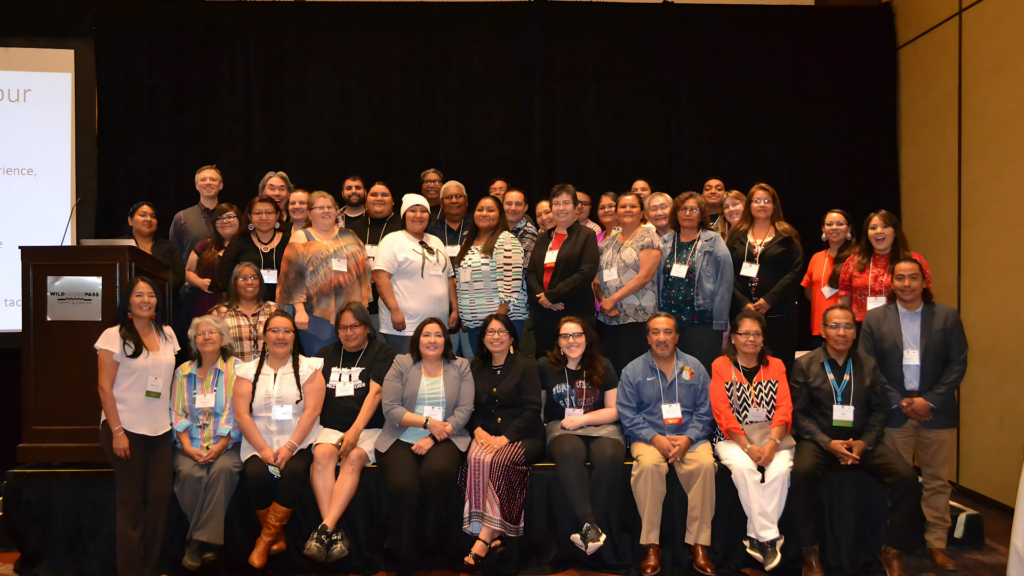
“All of them are so spread so far apart, and then they come together in one area to discuss what’s happening at their radio station, sharing any tips and tricks and knowledge that they might know.” Some emerge having formed new informal networks “to share programming, to share engineers.” The summit also makes room for something harder to quantify. “Part of it is also a cultural exchange,” Edsitty says, “and that’s always pretty integral to really any Native setting.”
“Our priority is and always will be our stations and keeping our stations on the air,” Wadsworth says. “If NPM went under, we’d want to make sure that our stations were able to stay on the air.”
Back on the Rosebud, Miller puts it his own way, the way he sometimes puts things on the air when the moment calls for it. “Life will let you down. Friends will let you down. Family will let you down. But the one constant that will never let you down is the music.”
For the people who have the radio on in the background, who send a text before sunrise asking for a song, who depend on a station run by four people with more grit than budget, that constancy is, for now, still there.
Other Stories
See All
August 6, 2026
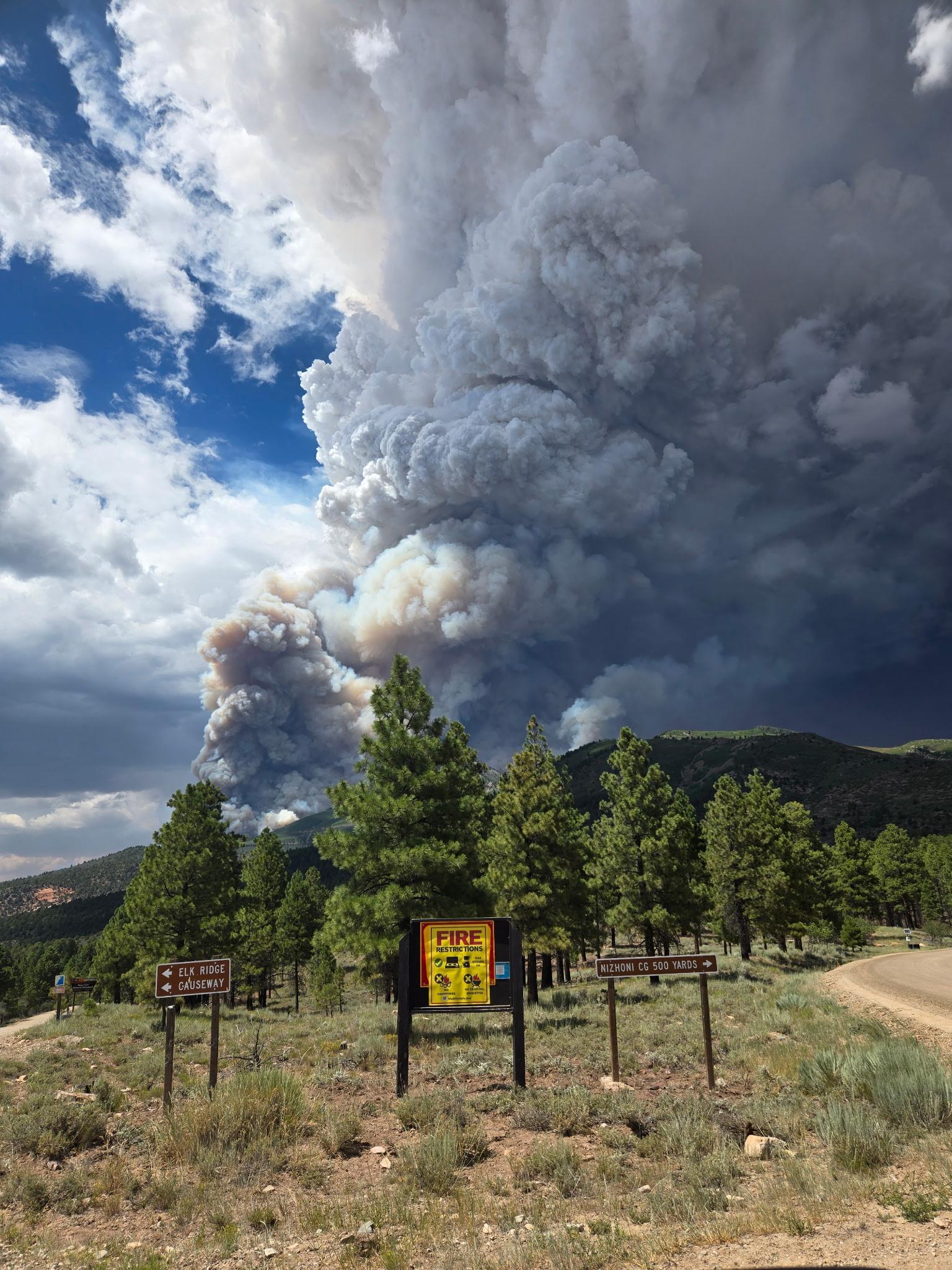
Through the West’s Worst Fire Season in Years, Local Public Media Keeps their Communities Informed
June 16, 2026
On Capitol Hill, Rural Station Leaders and the Lawmakers Who Represent Them Emphasize Their Vital Service
April 3, 2026
For Visually-Impaired Kansans in Rural Areas, Audio-Reader Brings the Local Stories

March 6, 2026
The First-Ever Rural Voices Day

February 27, 2026
noncomMUSIC Alliance: Turn on Wyoming Sounds. You’ll Hear a Friend on the Radio.