
The service, housed at University of Kansas, has served individuals who are blind or print-disabled for more than 50 years. The program is carried across the state by a network of public radio stations that make the signal possible.
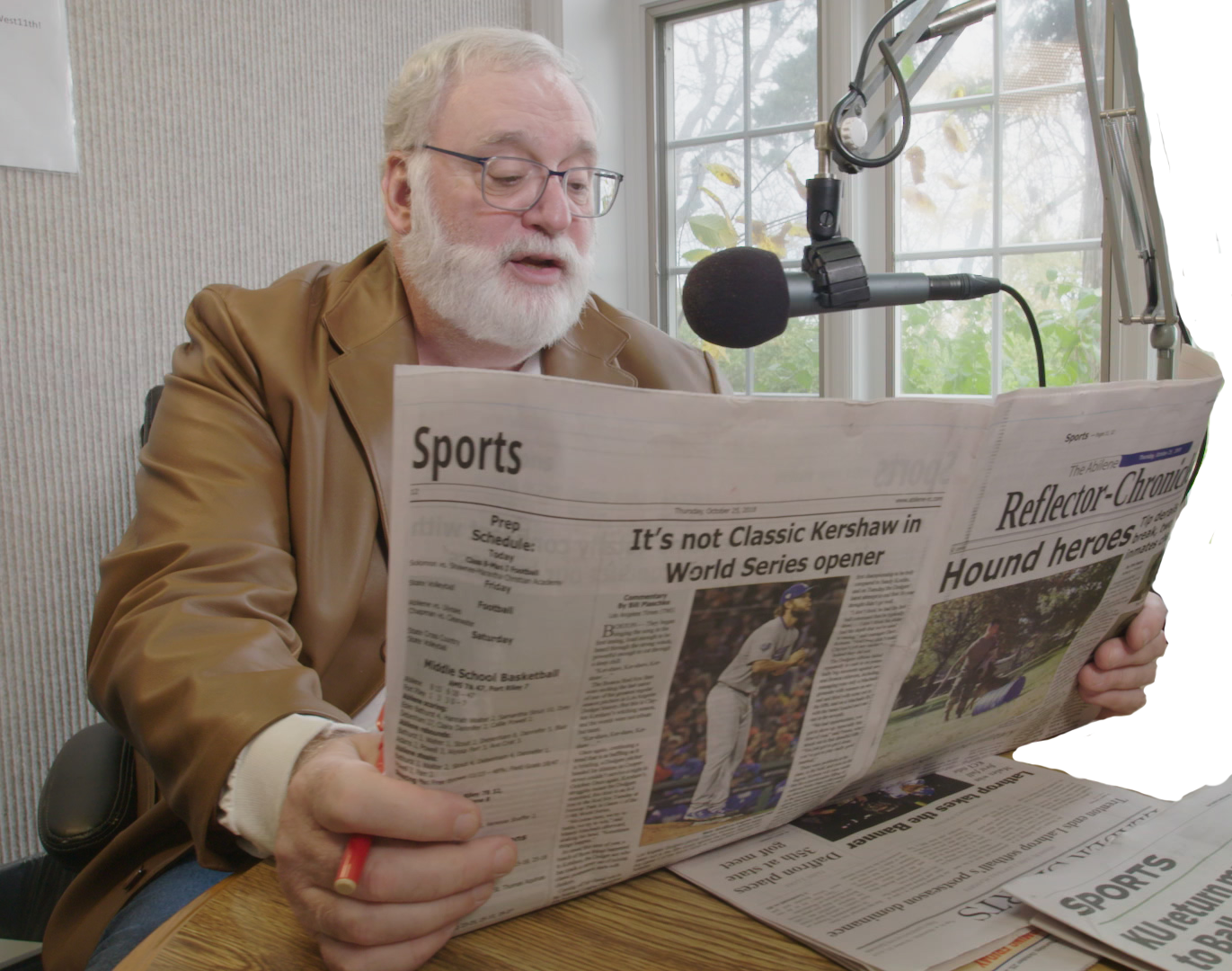
In a small recording studio on the University of Kansas campus in Lawrence, a retired science writer sits down once a week and reads a newspaper from Savannah, Missouri — a town he has never lived in but has come to know intimately.
“There is a little part of me that would like [to go] …[and] go sit in the courthouse and watch a trial,” says Rex Buchanan, former director of the Kansas Geological Survey, who has volunteered to read articles for the Audio-Reader Service for over 30 years. “I’ve read so many of them over time.”
That particular intimacy — a volunteer in Lawrence reading small-town court coverage to individuals who are blind or print-disabled across Kansas or western Missouri — is the quiet engine behind one of the oldest and most distinctive services in American public media.
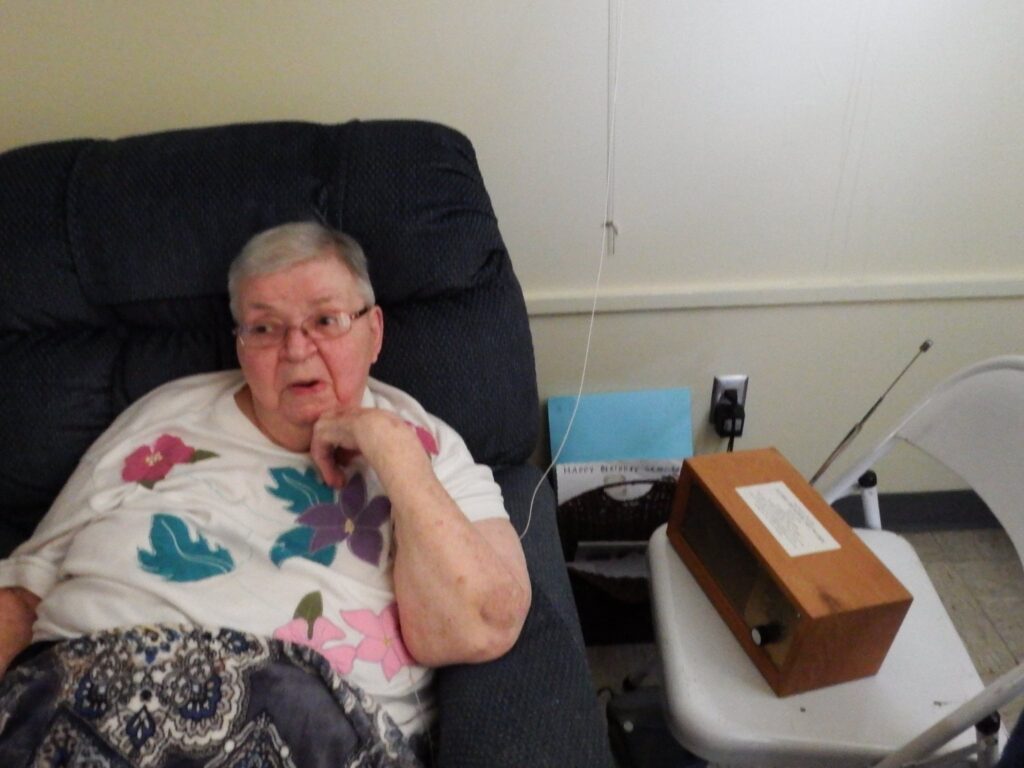
The service, housed at the University of Kansas, launched in October 1971, making it one of the first radio reading services in the world. Its model is straightforward and, more than half a century later, still essential: volunteers read newspapers, magazines, grocery store ads, and books aloud, broadcasting 24 hours a day primarily via subcarrier frequencies of public radio stations across Kansas and Missouri. Listeners receive a specially tuned radio, on loan at no charge, that picks up the Audio-Reader signal. This is a service that is similarly replicated in many states across the country, including Arizona, Ohio, Texas, and more.
Over the years, thousands of those closed-circuit radios have been distributed for use in private homes, nursing homes, and hospitals across the two-state region. Last year, 82 new listeners received closed circuit radios. Audio-Reader programming is also available online, via an app and, an Amazon Alexa skill, and an on-demand service called Telephone Reader.
Each were designed to reach the listeners no matter their approach to media or technology, built on their needs and requests. But Kehr is clear about the commitment: “We will continue to use radios as long as people ask for them. We’ll continue to find ways to serve people without WiFi as long as people don’t have WiFi.”
The radio service depends on a network of public media partners to carry its signal across the region: Kansas Public Radio, KCUR in Kansas City, Missouri, High Plains Public Radio (which covers 78 counties across five states), KMUW in Wichita, and several others. Without that infrastructure, Audio-Reader’s reach collapses to wherever broadband and telephone lines can carry it — which, for many of its most isolated listeners, isn’t far enough.
“We still have quite a few pockets,” says Martha Kehr, Audio-Reader’s Communications and Listener Outreach Coordinator. “If you don’t live within two miles of a paved road, you probably are on satellite internet, which is awful.”
Feloniz Lovato-Winston, who serves as director of both Kansas Public Radio and Audio-Reader, says the Audio-Reader and public media’s relationship first began because of shared technology and has deepened into something more over the decades.
“Both organizations share a very similar mission,” she says. “To make sure that access to information and entertainment, cultural experiences and companionship connection to their community, that that’s accessible to everybody for free.”
Although Kansas Public Radio has faced significant budget pressures in recent years, including federal CPB funding cuts and a short, but recent challenge to funding at the state level, state lawmakers included $800,000 for Kansas public broadcasters in their most recent state budget, a $300,000 increase from previous years.
Lovato-Winston notes that Audio-Reader’s operating budget comes entirely from private donations, but the indirect effects of funding pressures are still real — in shared staff, shared facilities, and the bandwidth required to maintain partner relationships across a sparsely populated state.
What public radio provides that Audio-Reader simply cannot, Kehr notes, is the ability to respond in a crisis. “We can’t break in with news alerts,” she says. “Without that human being at the local NPR station saying there’s bad weather coming — those kinds of emergency things are something we don’t have the capacity to do.”
The content Audio-Reader reads reflects the texture of rural life in ways no algorithm has yet learned to replicate. Volunteer Connie Rodriguez, a retired healthcare worker from the Kansas City area, reads the Iola Register every week for listeners — covering school board meetings, city council sessions, candidate profiles ahead of local elections, and the full results of every high school track meet.
“You have to read them all,” she says, “because there’s people — this is a small town, they all know each other and they’re excited to see their niece or nephew and know what their time was and how they placed in the game. They treat them like they’re the NBA and the NFL.”
That granularity is the point. Rodriguez describes elderly listeners relocated from rural hometowns to Kansas City nursing homes who tune in to their old hometown paper, not for breaking news but for obituaries, for familiar names, for the sense that home still exists somewhere. Rodriguez has seen this dynamic firsthand, through her years working in nursing homes before she retired.
“For them to be able to access their hometown newspaper is very important to them,” she says. “That’s where births occur, that’s where the deaths are listed, that’s where all the people that they know are. It helps them feel less like a stranger in this land.”
Buchanan, who grew up on a farm outside a town of 500 people in central Kansas, understands that need in a particular way. “Those little town weeklies out in western Kansas are not available to anybody other than as printed copies or maybe on the web,” he says, “but they’re not available in an audio form unless Audio-Reader does it. People in those little towns, man, do they care about those weekly newspapers. Those things are central to the lifeblood of the people out there.”
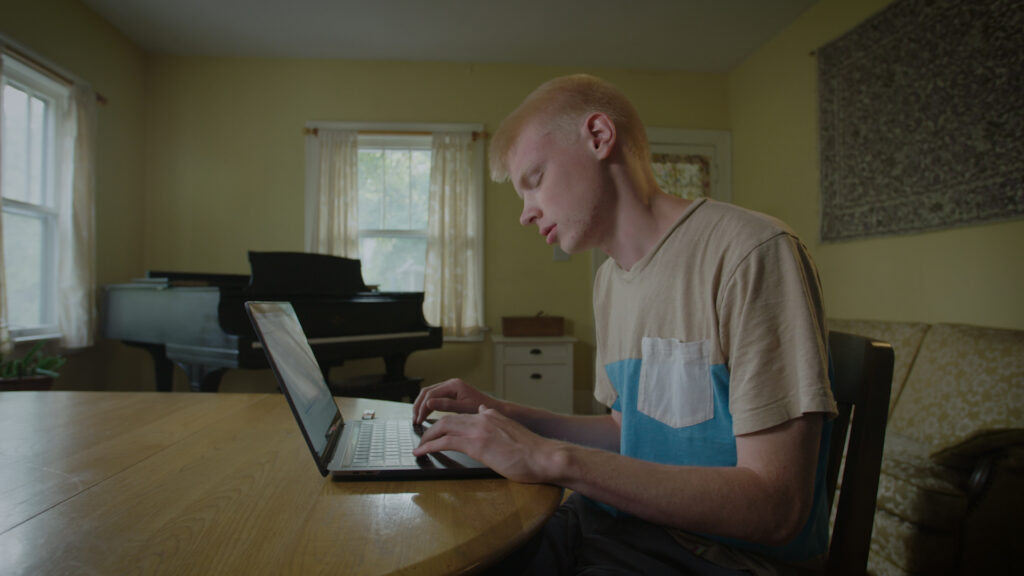
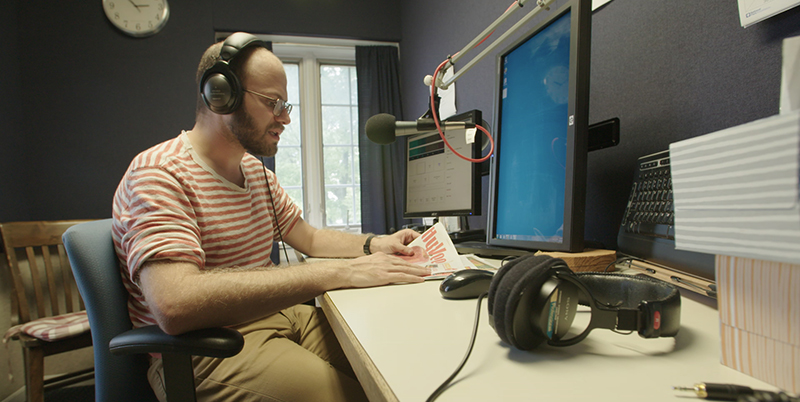
With more than 250 active volunteers reading over 15,000 hours of content annually, Audio-Reader draws heavily from the university community — retired faculty, current staff, students — but also from anyone who wants to do something useful before the rest of the world wakes up. Some have been doing it for 45 years.
The longevity, Buchanan says, comes from what happens at the organization’s annual volunteer banquet, when listener testimonials are played for the room. “Those clips are probably the biggest thing that keeps me coming back,” he says. “They are so heartfelt and meaningful that it’s very, very rewarding.”
Lovato-Winston argues that Audio-Reader represents something neither artificial intelligence nor commercial media has figured out how to replicate. People have never listened to the radio purely for information, she notes — the relationship with the voice on the other end has always been part of it. “I think we can’t really discount the relationships that we have,” she says. “There’s just something about knowing that somebody took time out of their day to read for you that makes it a more full experience. And that’s my theory as to why we just haven’t seen a drop in the number of people who sign up for the service.”
For the volunteers who show up week after week, and the listeners who have tuned in over 50 years, that relationship is the whole point.
Other Stories
See All
October 7, 2026
Iowa Public Radio Took The Chance and The Time To Own Itself
August 6, 2026
Through the West’s Worst Fire Season in Years, Local Public Media Keeps their Communities Informed
June 16, 2026
On Capitol Hill, Rural Station Leaders and the Lawmakers Who Represent Them Emphasize Their Vital Service
April 30, 2026
For Native Public Media and Tribal Radio Stations, the Signal Must Stay On
March 6, 2026
The First-Ever Rural Voices Day
