
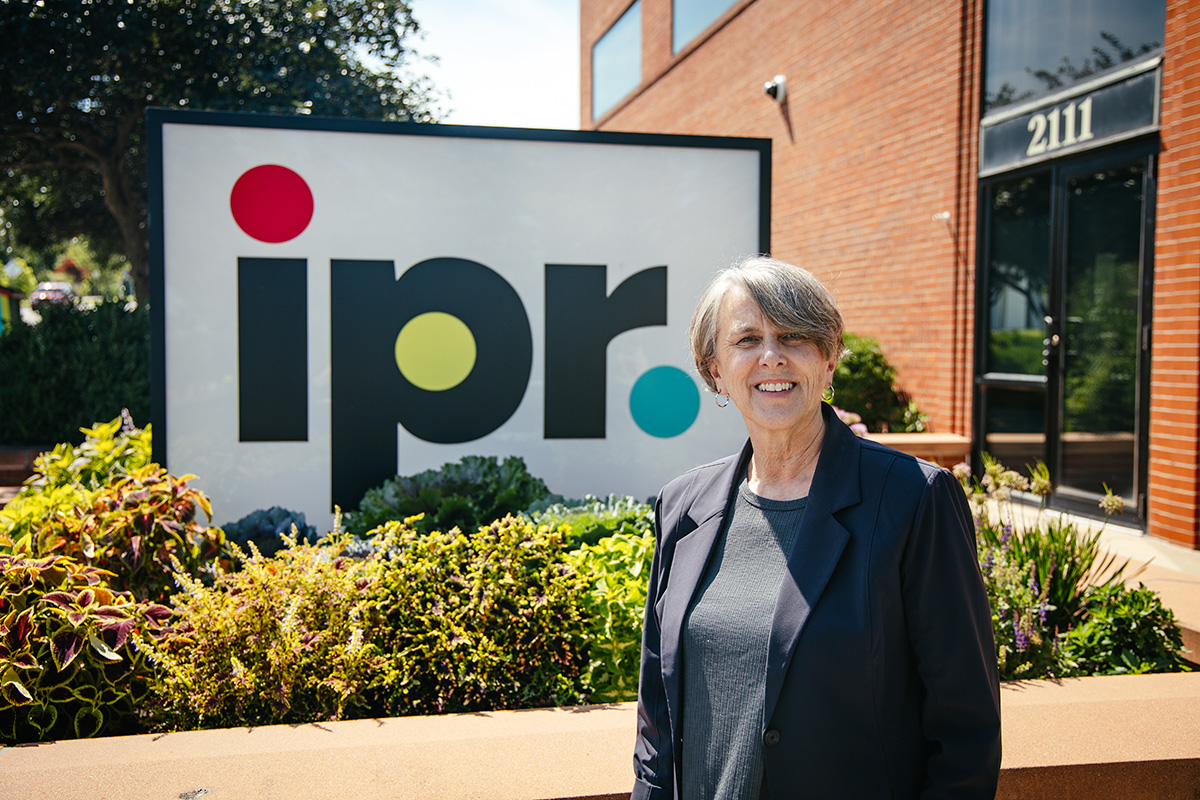
Myrna Johnson helped lead the charge of moving 27 stations out of the state university system and into community hands, deepening the connection to the listeners who still support the station.
The letter arrived in 2020, in the early months of the pandemic, and it did not go only to Iowa Public Radio (IPR). Similar letters went to a set of organizations on the edges of Iowa’s public university system. Myrna Johnson remembers what it said, in so many words: “There’s not going to be any more financial support.”
In the letter, the University Regents in Iowa also let it be known that it might be time to talk about the “stations’ licenses.” At that time, the licenses to operate as public radio stations, regulated by the Federal Communications Commission, were held by the universities in the state – a common arrangement in the public radio system. Talking about the licenses, as well as eliminating financial support for the stations, signaled that public radio may not have a long-term future in the university system.
Johnson, six years into what became a twelve-year run as IPR’s chief executive, immediately recognized that remark as an opening.
“So we decided to take it as an opportunity and say, ‘Okay, well then let’s talk about who owns the stations,'” she says.
Johnson had been through something similar; two decades earlier, while on the Friends Board at KUNC in Colorado, licensed at the time to the University of Northern Colorado, the general manager called one evening to tell her that the university’s trustees would vote the next morning to sell the station.
The Friends Board jumped in and bought the license and station instead, working grocery store parking lots to raise the funds to do so. The university would not let them fundraise on the air. What Johnson remembers from the KUNC experience was a core argument underneath it all.
“They’d created something that the community desired, and we were there to maintain that. Sometimes [the original owners] prefer a big check, but sometimes the community play works.”
In Iowa, the community-led approach also ended up being a winning ticket. In June 2022, Iowa Public Radio bought the licenses to all 27 of its stations from the Regents for just a dollar, becoming a community-licensed nonprofit with a board of its own.
Time is the thing Johnson says stations in this position rarely get. The Regents had said for years that they wanted to eliminate financial support for IPR, and much of her early tenure went to making the case that the network could get itself to independence if it was not pushed there too fast.
Even after the conversation turned friendly, speed was the worry. A license is an asset, and a university looking at its own budget can decide whether an asset ought to be sold.
“I was very concerned until we had a letter of intent from the Regents that someone on the Regents or one of the universities would say, ‘You know what? We could really use the cash right now,'” she says.
When it finally came, the letter of intent laid out the road to a purchase agreement and bought IPR a couple of years to prepare. Johnson spent some of that runway on a Corporation for Public Broadcasting (CPB) planning grant through the Collaborative Operations and Services program, pitched not as an IPR project but as a collaboration with the Regents to make the handoff a smooth one. It paid for a consultant who worked on the governance questions and came back with a report recommending a new membership database, marketing support and audience research. The second grant helped IPR do all three of these things.
“This is a reality that stations don’t have anymore,” Johnson says of one of the many opportunities lost with the closure of the CPB after the 2025 public media recission package passed.
One big consideration of the transition was inventory of all of the network’s assets, which at network scale can be a different animal than transferring the assets of a single station. “It’s 27 transmitters and 27 transmission lines and 27 towers, and you’re going to own some, you’re going to rent some,” Johnson says. Some of that infrastructure stood on ground the universities intended to keep, which meant new leases, and others were already on rented ground, which meant assigning the old leases to IPR. “There were a lot of details to nail for a network.”
All of it had to be done quietly, which she describes as harder than any of the engineering. Between the letter of intent and the signed agreement, IPR had to work toward something it could yet announce, all while ensuring that staff, board members, and donors were looped in enough to understand what was needed. Johnson remembers the work was steering that forward “in a way that we didn’t have one great big hiccup that blew the deal.”
The staff carried the heaviest end. “Staff resist change, and for many, they were university employees for their entire career,” she says. Some had been counting years toward a university retirement. “You had people who wanted to retire from the university at 40 years and they were at 36.”
For listeners, the priority was that nothing about the stations they loved would change, even if the branding got a bit refreshed. IPR made no programming changes on the way through, and kept its people on all three campuses.
“While we’re no longer a part of the universities, we’re still anchored in those university towns,” Johnson says. “The ethos of a university-based station is still there.” That anchoring works as a coverage strategy rather than a sentiment.
Close to two-thirds of the counties IPR serves meet the federal definition of rural, and the network’s reporters are placed around Iowa on purpose. Its membership in Harvest Public Media multiplies the agricultural reporting it can air, and its Western Iowa reporter covers the most rural quarter of the state.
IPR saw historic funding streams change or go away in succession: University support ended. State support went with it, because once IPR was no longer attached to the universities, there was no longer a state channel through which to receive it. Then came the rescission of CPB funding. “So we’ve had three waves of needing to fill the bucket, and our listeners have stepped up, and our donors have stepped up,” Johnson says.
What she thinks gets missed is that IPR did not simply weather the transition, it looked for a way to strengthen off of it. The network ran its first comprehensive campaign, A Resounding Future, built around excellence in journalism, new technology and new talent, and an endowment. The goal was six and a half million dollars. The station raised eight million, much of it in five-year pledges still arriving.
“I do think that the magic of all this timing was accidental,” she says. “But I think that going independent, having a campaign, then losing CPB support, it all just worked together to set us up.” While the timing wasn’t something they had control over, it was the foundational work that led to their success in the end. “We were ready and took each set back as opportunities. We had a strong board, with key players who were essential in accomplishing this goal. We were successful because the community saw us as an important institution in the state,” Johnson emphasizes.
Her advice to stations looking at a version of this starts with one key ask: time. Take the time and do the planning. Come out of it holding a document. “Then you have a document that you can go to any funder to with and say, ‘Listen, these are clear needs that we’ve identified that will help us launch a super successful independent entity,'” she says.
Peter Clowney, who arrives from Nebraska Public Media, officially began as the new CEO at the end of September. The advice Johnson leaves him and the staff of IPR is not about balance sheets.
“Do excellent journalism, but don’t forget that we also need the sparkle,” she says. “Our brand is about curiosity. I urge you to follow your own curiosity, think about creating moments of joy and about being an oasis, an oasis where we can have civil conversations.”
Other Stories
See All
August 6, 2026
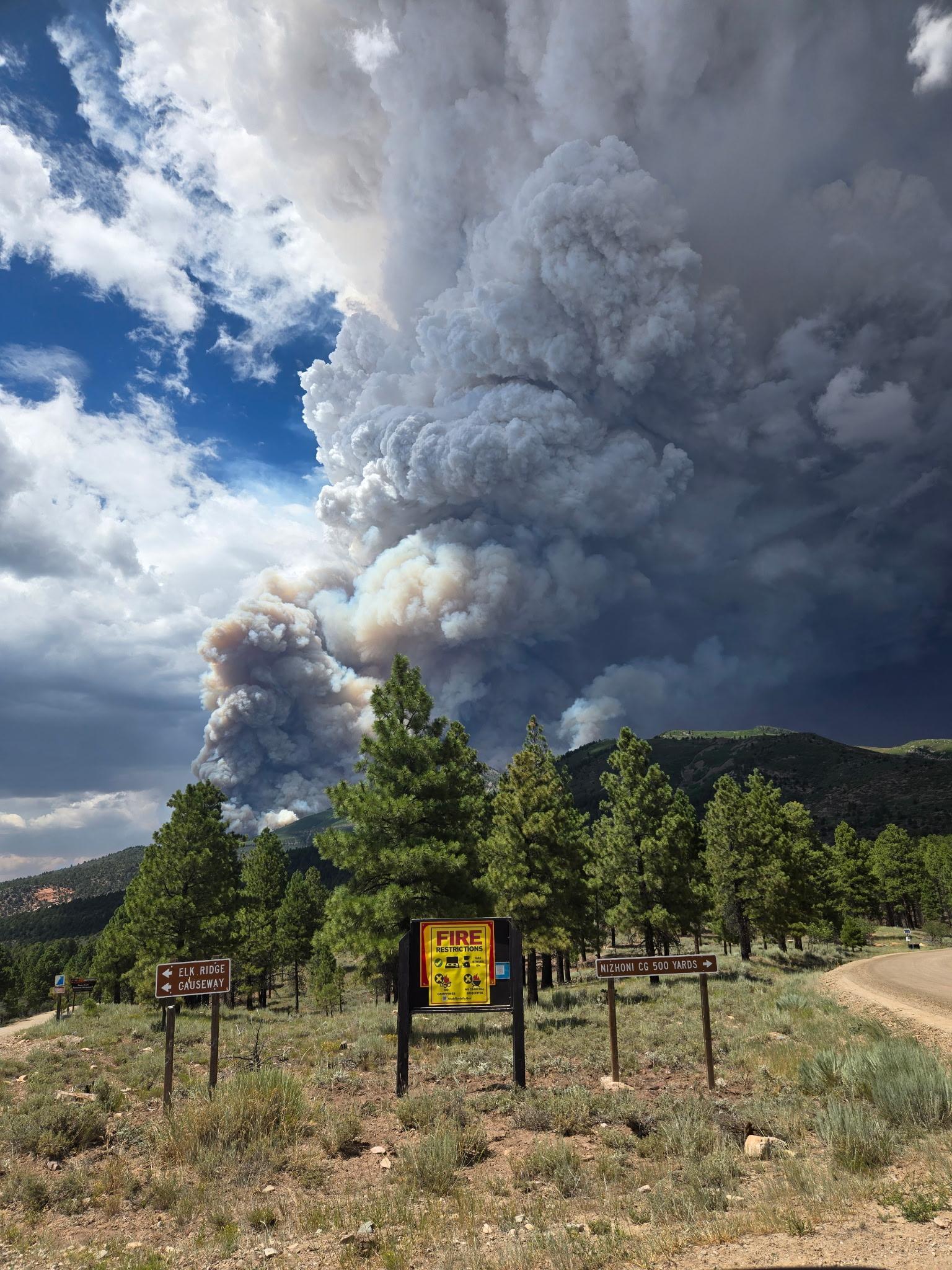
Through the West’s Worst Fire Season in Years, Local Public Media Keeps their Communities Informed
June 16, 2026
On Capitol Hill, Rural Station Leaders and the Lawmakers Who Represent Them Emphasize Their Vital Service
April 30, 2026
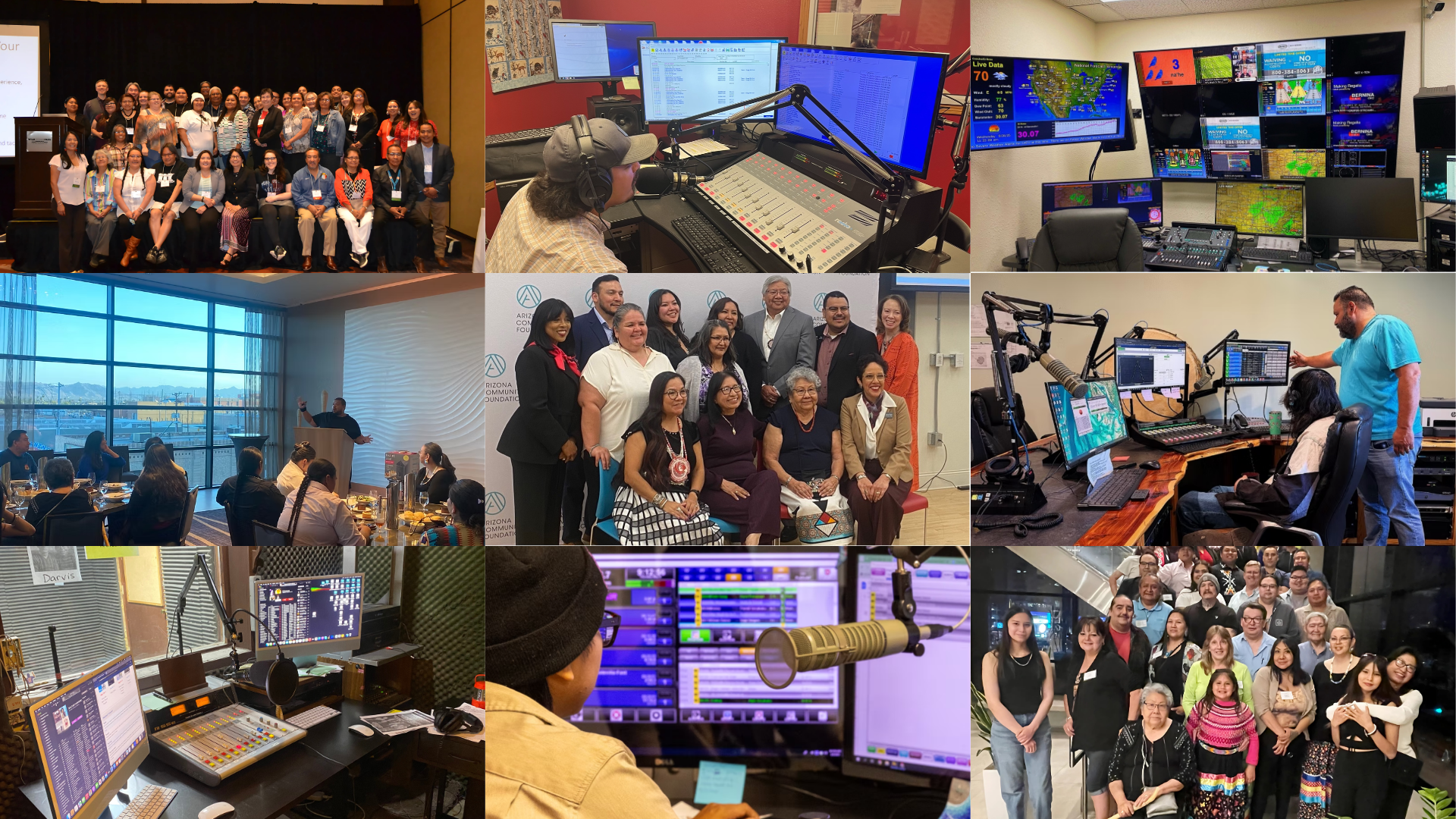
For Native Public Media and Tribal Radio Stations, the Signal Must Stay On
April 3, 2026
For Visually-Impaired Kansans in Rural Areas, Audio-Reader Brings the Local Stories
March 6, 2026
The First-Ever Rural Voices Day
