
By Breanna Jimenez
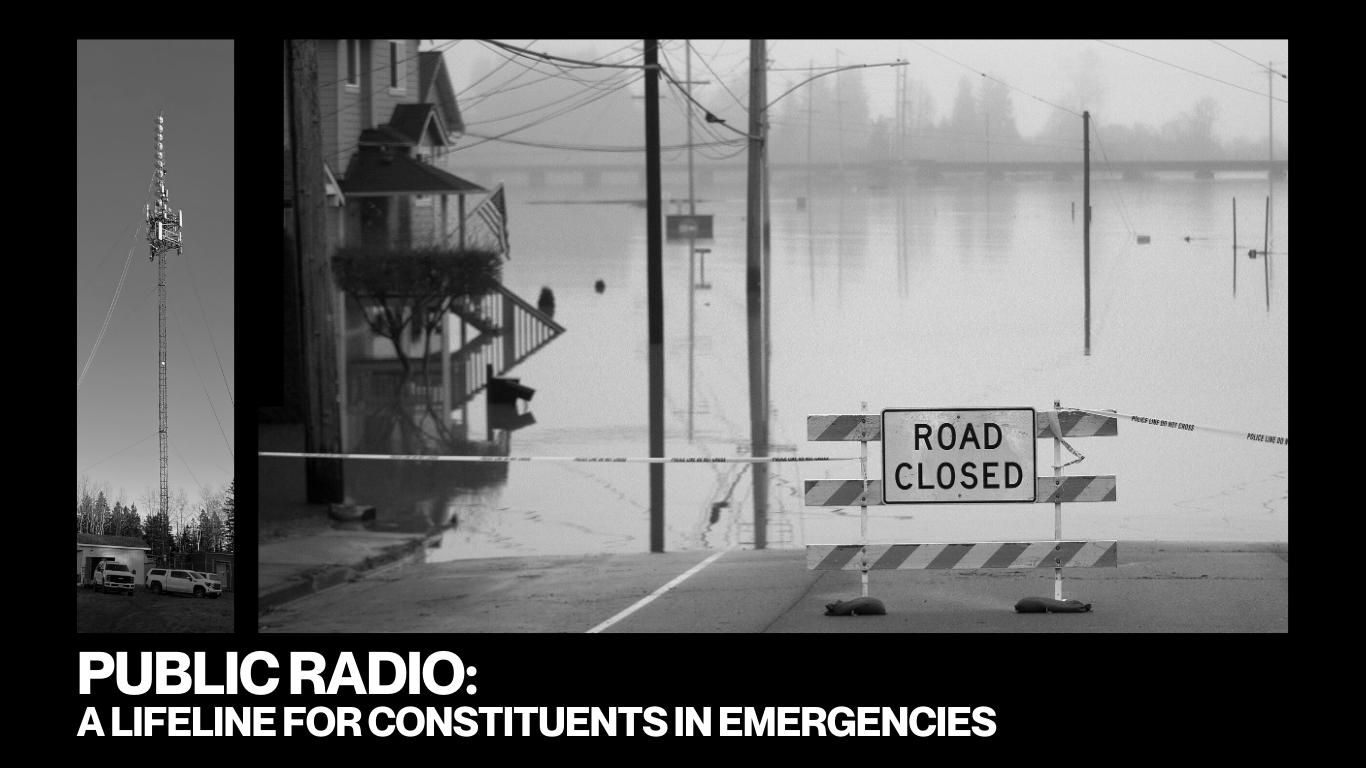
The congressional staff briefing, co-sponsored by The National Emergency Management Association (NEMA) and International Association of Emergency Managers (IAEM) and supported by the Congressional Disaster Preparedness and Recovery Caucus, highlighted the important role public radio plays during emergencies and natural disasters.
On Wednesday, February 11, 2026, the Alliance of Rural Public Media partnered with NEMA and IAEM to co-sponsor a briefing for congressional staff on Capitol Hill in Washington D.C., titled “Public Radio: A Lifeline for Constituents in Emergencies.” The bipartisan Congressional Disaster Preparedness and Recovery Caucus supported the event, which emphasized the role public radio stations play in keeping Americans informed and safe during emergencies and natural disasters.
Congressmen Chuck Edwards (R-NC), Troy Carter (D-LA), and Jared Moskowitz (D-FL) opened the event with remarks on the integral role public radio stations play within their districts.
“We know that communications are often the first thing to fail in a storm,” Representative Carter shared during the event. “Power goes out. Broadband and cell networks are overwhelmed or damaged. In those moments, public radio stations step up as trusted, local lifelines—working hand in hand with emergency managers to deliver real-time alerts, evacuation orders, and lifesaving guidance through the Emergency Alert System and live reporting.”
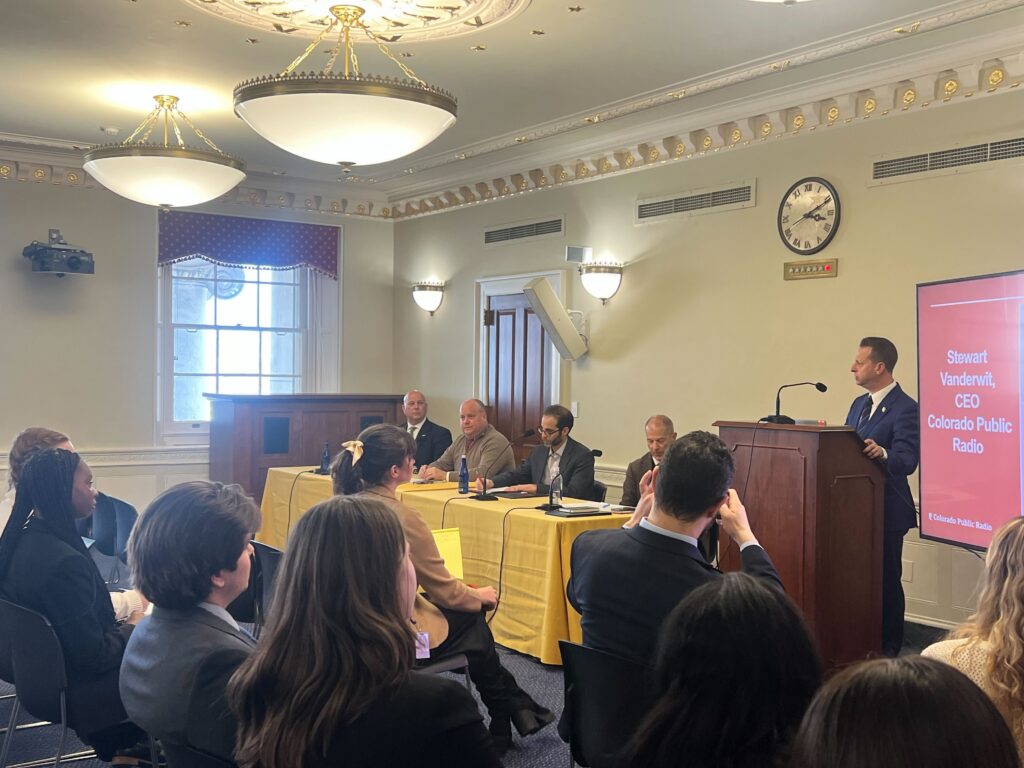
Stewart Vanderwilt, President and CEO of Colorado Public Radio, echoed these sentiments and provided several examples of Colorado communities that rely on public radio stations as a vital and primary source of information for emergency preparedness, response, and recovery.
Vanderwilt highlighted Aspen Public Radio’s service during a wildfire period when all internet and texting was offline across a large portion of the Roaring Fork Valley; and KGNU Boulder delivering bilingual preparedness, emergency and recovery information in response to a community need.
“CPR operates from 33 different tower sites across Colorado. Several of them do not make economic sense – because the cost to install, operate and maintain service in rural and mountain areas is often inverse to the size of population they reach,” Vanderwilt said, referring to, among others, a mountain top tower that is sometimes accessible in the winter only by snow-shoeing that is the an essential communications channel into the 900-person town of Ouray.
“But these facilities are essential to providing comprehensive coverage across the state.”
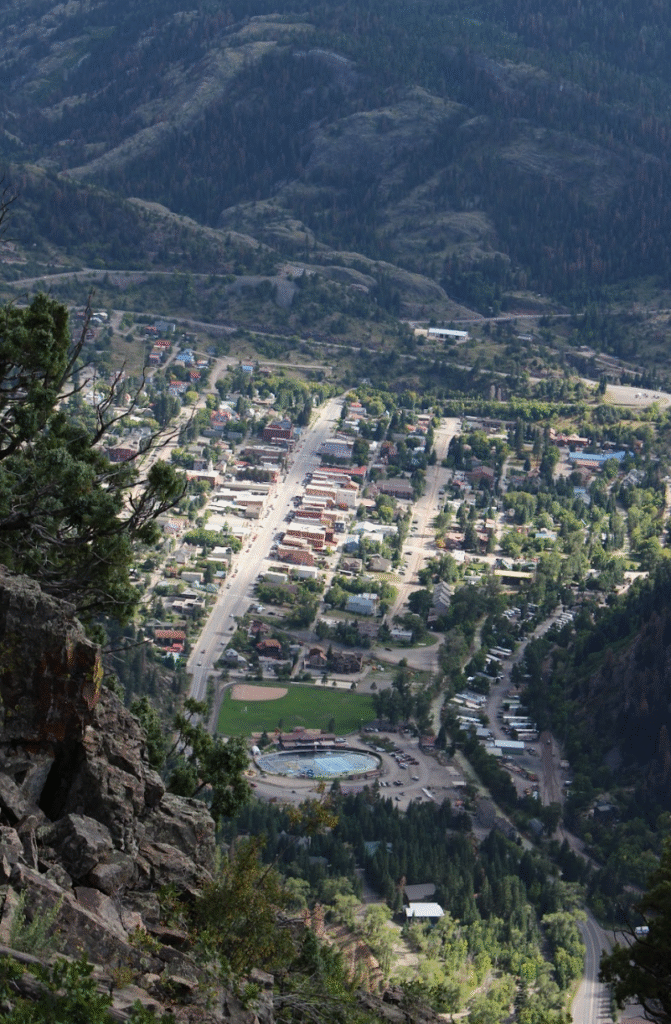

Colorado Public Radio reaches over 90% of the population of the state through its operation of three distinct radio services, across 52 frequencies, broadcasting from 33 tower sites. It is an integral resource, and at times the only source, for community members to receive information and emergency alerts.
Local public broadcasting forms the backbone of a reliable system that keeps Americans informed during crises, a commitment embodied by Randy Wright of WUFT’s Florida Public Radio Emergency Network (FPREN) team.
FPREN provides 24/7/365 content and connectivity through studios and personnel based at WUFT. This service reaches more than 23 million Floridians through the transmission systems and media platforms of every public media organization in the state. Understanding the evolving nature of digital, social, and mobile systems, FPREN has taken a proactive approach to bridge these communication methods and maintain connection amongst community members.
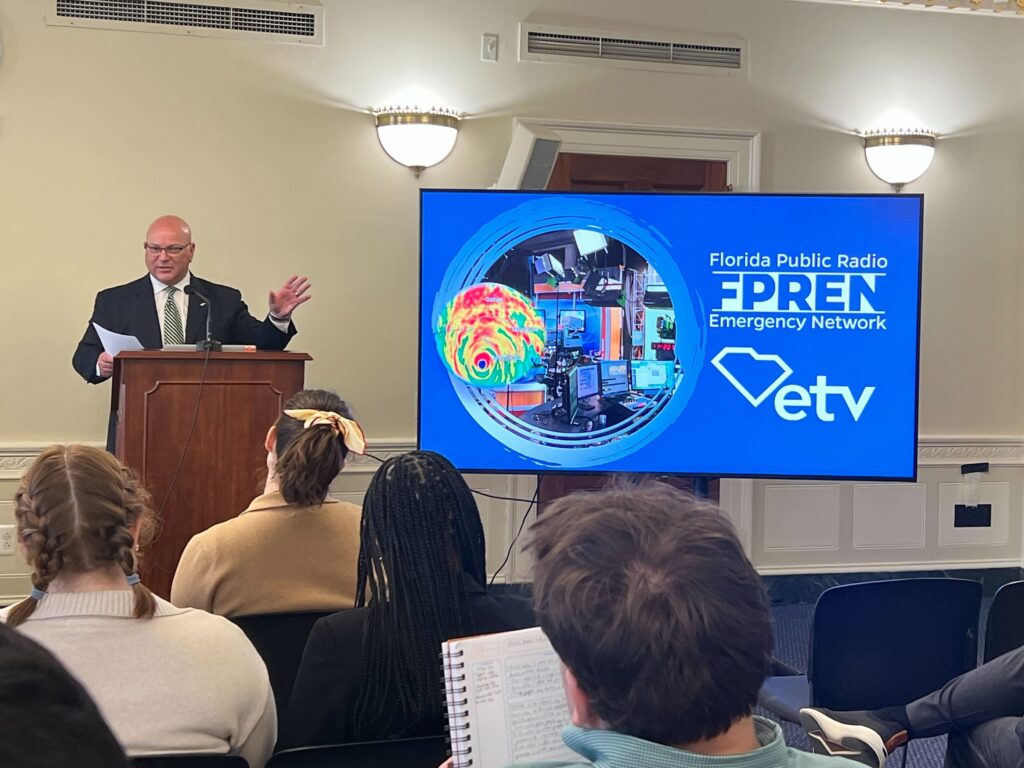

“The FPREN model provides turn-key solutions for partner websites and social media accounts that highlight the local public media brand and enhance the connection with local viewers and listeners,” Wright said. “This ensures that local public media brands continue to meet people where they are regardless of the platform, while maintaining a commitment to free, over-the-air access for all people, especially critical during crisis situations.”
The briefing also included remarks from NEMA’s Matt Cowles, who further emphasized the role of local radio stations. Cowles stressed that emergency managers rely on public radio stations, especially to reach those no one else does..
Public radio is a lifeline for communities, especially those in rural areas, delivering emergency broadcasting and information. “One of the most important things people miss in disasters is disaster communications,” Representative Moskowitz shared. “Public radio stations are so important in that.”
Other Stories
See All
August 6, 2026
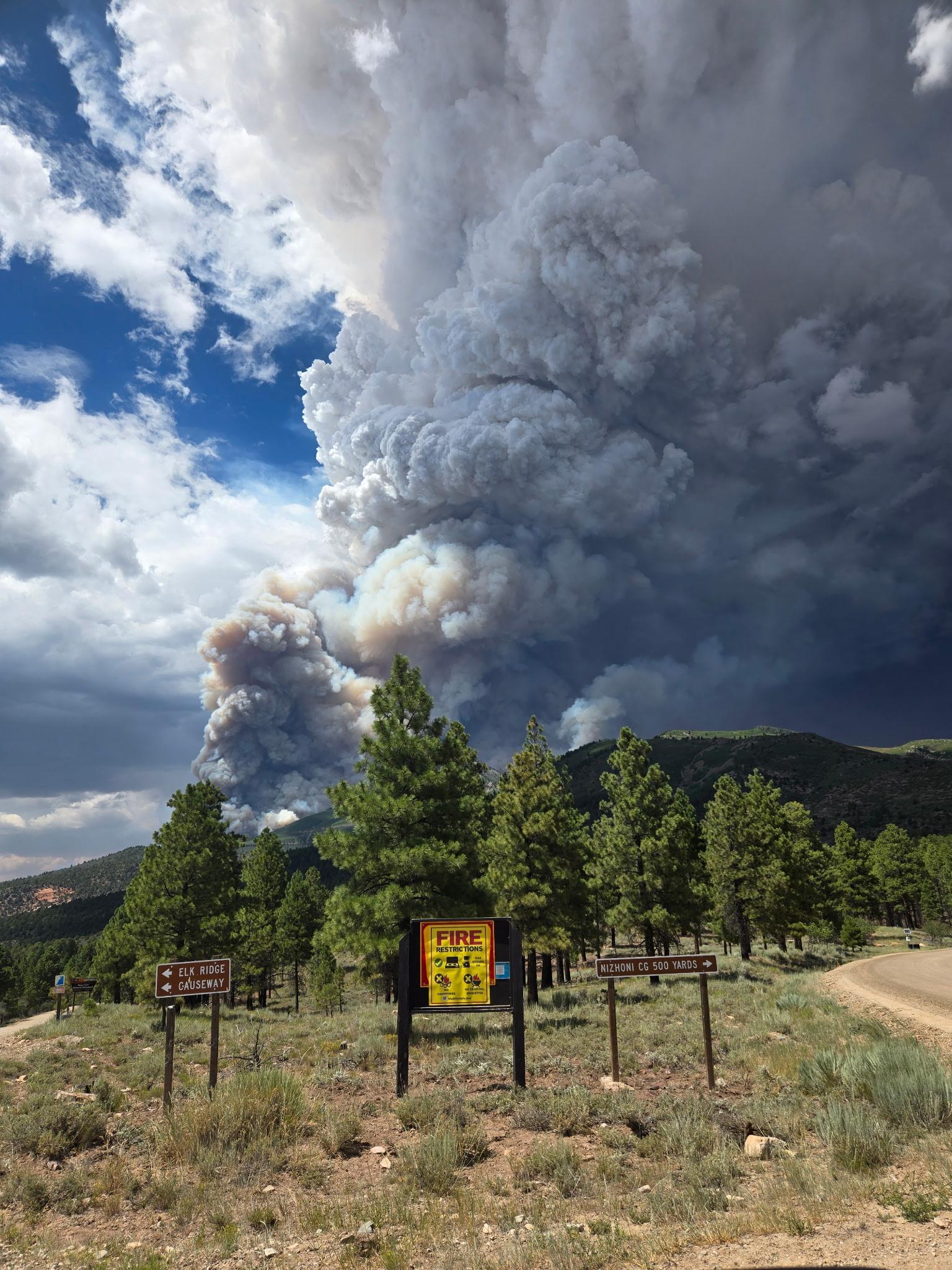
Through the West’s Worst Fire Season in Years, Local Public Media Keeps their Communities Informed
June 16, 2026
On Capitol Hill, Rural Station Leaders and the Lawmakers Who Represent Them Emphasize Their Vital Service
April 30, 2026
For Native Public Media and Tribal Radio Stations, the Signal Must Stay On
April 3, 2026
For Visually-Impaired Kansans in Rural Areas, Audio-Reader Brings the Local Stories

March 6, 2026
The First-Ever Rural Voices Day
